

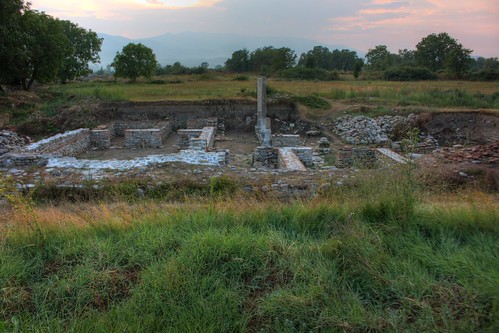
H Nikopolis ad Nestum (Νικόπολη στον Νέστο) είναι αρχαία Ρωμαϊκή πόλη που ιδρύθηκε το 106 π.Χ. από τον Ρωμαίο Αυτοκράτορα Τραϊανό προς τιμήν της νίκης του απέναντι στην Θρακική φυλή των Δάκων. Από εκεί προκύπτει και το όνομα "Νικόπολη". Η πόλη χτίστηκε στις όχθες του ποταμού Νέστου, κοντά σε Θρακικό οικισμό. Βρέθηκε στην ακμή της την περίοδο μεταξύ 2ου και 4ου αιώνα μ.Χ. και μετά ξανά στο πρώτο μισό του 6ου αιώνα. Η οικονομική της ευμάρεια αποδεικνύεται από το γεγονός ότι είχε δικό της νομισματοκοπείο από την εποχή του Ρωμαίου αυτοκράτορα Κόμοδου (180-192 μ.Χ.) έως και την εποχή του αυτοκράτορα Καρακάλλα (211-217). Διάφορα θυσιαστήρια που αποκαλύφθηκαν συνδέονται με την λατρεία του Δία, της Άρτεμις, του Πλούτωνα, του Ερμή, του Θρακικού Θεού Ιππέα-Κυνηγού, και του θεοποιημένου ποταμού Νέστου.
Έχουν βρεθεί διάφορα εργαλεία που σχετίζονται με το λάξευμα της πέτρας, πράγμα λογικό με βάση την αφθονία σε μάρμαρο της περιοχής, και την μεταλλουργία.
Η πόλη καταστράφηκε το 577 μ.Χ. από τις επιδρομές των Σλάβων. Στα ερείπια της πόλης ιδρύθηκε αργότερα μεσαιωνικός οικισμός, ο οποίος άκμασε μεταξύ 10ου και 14ου αιώνα.
Έχουν βρεθεί διάφορα εργαλεία που σχετίζονται με το λάξευμα της πέτρας, πράγμα λογικό με βάση την αφθονία σε μάρμαρο της περιοχής, και την μεταλλουργία.
Η πόλη καταστράφηκε το 577 μ.Χ. από τις επιδρομές των Σλάβων. Στα ερείπια της πόλης ιδρύθηκε αργότερα μεσαιωνικός οικισμός, ο οποίος άκμασε μεταξύ 10ου και 14ου αιώνα.
H Nikopolis ad Nestum βρίσκεται στα όρια του δημοτικού διαμερίσματος Гърмен (Γκάρμεν) της Βουλγαρίας.
Σημείωση: Μπορείτε να δείτε ντοκυμαντέρ στα Αγγλικά για την Νικόπολη εδώ.
Σημείωση: Μπορείτε να δείτε ντοκυμαντέρ στα Αγγλικά για την Νικόπολη εδώ.
[ENG] Nikopolis ad Nestum is an ancient Roman town, that was established near a prehistoric Thracian settlement. It was found in the year 106 b.C. by the Roman Emperor Trajan in honor of his victory over the Dacians, (from here is the name "Town of the victory at the Nestum river"). The town experienced its biggest cultural and economic boom between the 2nd and 4th century a.C., and once again in the first half of the 6th century a.C. The town had its own mint and produced coins from the time of Emperor Commodus (180-192 a.C.) till Emperor Caracalla (211-217 A.C.). Numerous sacrifice monuments connected with the religious cults to Zeus, Artemis, Plutus, Hermes, the Thracian rider and the river god Nestus have been found. Also many items connected with the development of stone-carving, metallurgy and metal-working have been found. A stone-carving craft for artistic processing of stone has been working in the ancient town, given the abundance in the area of different types of colour marble. The town was devastated in a 577 a.C. during the invasions of the Slavs. A medieval settlement was established over its remains and it experienced its cultural and economic boom in 10-14th century a.C. [Info from the sign next to the archaeological remains]. One can see short documentary for Nikopolis ad Nestum here.
[BUL] Никополис ад Нестум.
[BUL] Никополис ад Нестум.





 Posts
Posts

